As I am back to school next week, I though I would update my blog as to how my summer research went.
I stayed in Guernsey for 2 weeks in July, and through friends on the island I managed to organise 4 separate interviews. Each interview lasted for around an hour and from them I gleamed much extremely useful first hand information. I interviewed Francis Girrard, a builder contracted by Germans during the occupation, Ray Gaudion, a Policeman at the time of the occupation, and two ladies, Olive Saar and Molly Bihet, both who were children during the war. The latter, Molly Bihet, has written three books on the subject and was extremely helpful in the direction of my project. Overall the interviews presented many views that I had not considered earlier in my preliminary research, most prominently their views and attitudes to resistance, escapism and survival which I believe will now form the basis of my project.
I also visited the Guernsey Occupation Museum, the Underground Museum and the Priaux Archive Library, who were incredibly helpful in suggesting potential interview candidates and allowing me access to their substantial war time newspaper archives. I have also collected many books on the subject, and these will undoubtedly prove useful for reference when I come to write my final essay and compile my presentation. My collection should also solve the problem of lack of resources available for me, even when I spent hours at the John Rylands University Library earlier this year, trying to find a single print that pertained to my subject!
I am very pleased with my summers work, and although I still have much ahead of me to do, I am now looking forward to moving my project onwards!
Saturday, 27 August 2011

Tuesday, 7 June 2011
Let's Get Going!
As I have not posted in a while due to various AS level exams, I thought I would post an update on my current position. Up until now, there have been more pressing engagements as such but from here on in, the true project will begin!

I am travelling to Guernsey for two weeks on the 7th of July, a trip which should serve as a vital part of my project. While I am there, I will be hopefully interviewing a variety of people, both experts and people with first hand experiences. I am contacting these people through my friends on the island which have been incredibly useful in this process, and I am attempting to utilise the Guernsey Branch of the Channel Islands Occupation Society and the Prialux Archive Library to help in my research. My friends on the island have also taken the time to send me current articles of the 'Guernsey Press' that i may be interested in. I have found these very useful in narrowing down the questions I intend to ask in the interviews,and also in finding new areas that i could strive to learn about.
One subtopic that I have especially become intrigued by came across when I read a stream of articles about the recent liberation day celebrations. From these articles I gauged a feeling that Liberation was extremely important to the islanders not just of Guernsey but also of Jersey and the smaller islands too. This led me to thinking, which holds greater emotive power; that of occupation, or liberation? It is an interesting question for my EPQ as the answer to this will undoubtedly be varied yet if overall the occupation held a greater (obviously negative) response, then it would imply that there are indeed raw feelings about the subject, and that would point to a divide between the islands and the mainland. Perhaps this divide is still embodied in a different way; in places I have seen Guernsey as a foreign country that speaks English (and this is not always the case!) due to the differences in currency, economics, road signs and general infrastructure that one would expect to be uniform with the rest of Great Britain.
Obviously this assumption is, well, a grand assumption, but it would be interesting to follow this lead and see if there is any significance behind the interpretations of these articles.
I will also be meeting with my EPQ advisor, the legendary Mr Jones, who will undoubtedly help to narrow down my currently broad project and help find target areas for research.
In my next post I will hopefully give details about my upcoming interviews, and the results of my first advisory meeting.
Monday, 7 February 2011
Sources of Information: Teddy's tips for a Personal Interview
Interviews are very useful in order to obtain views and opinions from different sources for your project. Primary sources are always useful both for information and also obtain various slants that you may not have been aware of. If your topic is a debated subject then interviews can be extremely useful to either back up your line of argument, or to provide an alternative side that you can address. However, there are also many drawbacks that one must be wary of when using personal interviews in their project.
- Bias; an interview with a Primary Source (someone who was there at the time) will always be biased towards or against the topic. One must acknowledge this when interviewing.
- Emotion; the topic of the interview could be a raw area for the interviewee; as the interviewer you will need to be constrained and slightly removed in order to control the conversation.
- Authority; beware of the interviewee controlling the direction of the interview. You must be able to stick to your questions and get what you want out of the interview. Don't be bullied into otherwise.
- Topic; the best source of information may not arise from a personal interview. They are difficult to organise and may not be worth the effort if all you are after from them is some facts that could have been obtained elsewhere.
- Waiting for the answer; pausing is one of the most effective interviewing techniques, especially if the topic is a much debated subject. Ask a probing question, and after their often short reply, pause. This often has the effect of the interviewee becoming uncomfortable, and hastening to fill the silence with unprompted justification for their answer. From this you can gleam their true position on the subject.
- Investigate; do not be afraid to ask long questions. You are not their to chew the cud, get stuck in. However, by the same token, do not be too blunt or offensive with your questions (E of BEAT), but correctly worded questions can avoid offending whilst still reaching deep for an answer.
- Note; make sure you have lasting information from your interview. Either film it, record it or take notes through out - these will be much more effective than your memory alone, and much more useful in the long run when you may need to refer back to the interview.
Saturday, 5 February 2011
Why The Islands?
 The Channel Islands were the only part of the British Commonwealth to be occupied by the German Army during World War Two. Even after D-day brought the war back into France in 1944, the Germans remained on the islands. Was it worth the effort for 194 km² of rock in the English Channel? Why were the islands targeted?
 In order to answer this question, one must be familiar with the geographic location of the Islands. This map to the right provides a clear view.
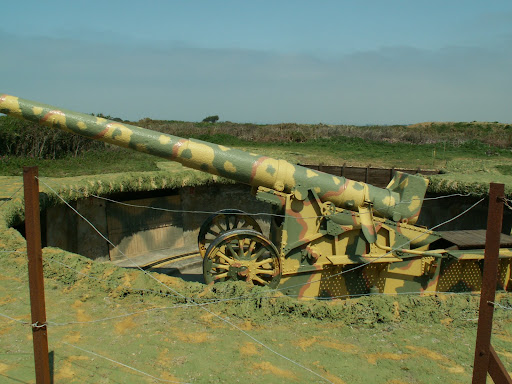
As we can see, the islands could be used as a strategic outpost for shelling the British Coast, as a port for wartime naval craft, and even had the potential to be a stepping stone for invasion. During the occupation, the islands were utilized for shelling, with thousands of entrenchment systems, Martello 'look-out' towers and fortifications and artillery trenches, all built by P.O.W. slave labour.
However, if we consult the map once more, it is apparent that the Islands are actually much closer to France than Britain, and there are points on the French coast where there is a much smaller distance between the French beaches and the British cliffs. So why were the Channel Islands targeted and so heavily fortified?
 I believe that the main motive for the initial invasion and the resilience in which the German occupation force held out can probably be attributed to the fact that the islands were British. This small collection of islands were the only region of British Commonwealth that was successfully invaded. While the mainland resisted invasion in the Battle of Britain, the Islands remained captive for the entirety of the war. I believe the underlying reason for this is simply vindictiveness from the German High Command. To the German Army, and the Nazi regime, it could be seen as a victory; something that became even more important after the War turned and the soviet Red Army began butchering their way to Berlin. Stubbornness and resilience can be seen throughout the occupation, for example when the Royal Navy attempted to starve the invaders out with a blockade in 1944 (one of the only actions taken in an attempt to free the Islands) to no avail. Eventually the blockade was abandoned. The naval blockade made the conditions for the Islanders even worse, and resentment for the British for not coming to their aid would no doubt have increased as many began to starve. It is detachments like these that i wish to research in an attempt to see if there are still 'hurt feelings' as such.
 On a side note, as Holocaust Memorial Day has recently passed, I wish to pay respects to the 700 that died in concentration camps on the Islands, the only on British soil. 6,000 people were impounded in the camps during the occupation, and the inhabitants were given minimal rations and forced to work until exhaustion, or even death. Please remember them.
Wednesday, 19 January 2011
The Do's and Don'ts of EPQ
Things to keep in mind:
DO NOT bite off more than you can chew. If you do, make sure you adapt it so it is workable.
DO plan your project. Make sure you manage your time and set realistic deadlines.
DO research. Your project needs to be backed up with evidence!
DO ask for help when you need it, whether its from your advisor, a teacher or a friend.
DO be prepared for your project to change.
DO update your blog regularly!
DO have faith. Your project will almost definitely go through a rough patch, but stick it out - it will be worth it.
Good Luck!
DO NOT bite off more than you can chew. If you do, make sure you adapt it so it is workable.
DO NOT fail your AS levels because of your project!
DO NOT however, leave it until the last minute to try and finish your EPQ. (Two sides to every coin!)
DO NOT make your conclusion before you've finished: keep your mind open for change.
DO NOT plagiarise!
DO NOT loose sight of why you're doing your EPQ - make sure you enjoy it!
DO plan your project. Make sure you manage your time and set realistic deadlines.
DO research. Your project needs to be backed up with evidence!
DO ask for help when you need it, whether its from your advisor, a teacher or a friend.
DO be prepared for your project to change.
DO update your blog regularly!
DO have faith. Your project will almost definitely go through a rough patch, but stick it out - it will be worth it.
Good Luck!
Monday, 17 January 2011
My Extended Project
The Effect of the Nazi Occupation on life in the Channel Islands and if there are any cultural changes still visible today.
In the short period of five years from 1940- 1945, Jersey, Guernsey, Sark and Alderney changed dramatically. The most obvious effect is that of the landscape; the tall Martello towers still cast shadows over the coast of the Channel Islands and bunkers wall the cliff paths, half hidden by heather and gorse. However, I doubt that the biggest change would be that of the physical aspects of the Islands. During the five long years of occupation the Islanders were forced to share their home with the German invaders, whilst being completely cut off from the UK mainland.
This opens up many questions:
- How did the islanders and Soldiers find an equilibrium in which to coexist?
- How were minorities treated on the Islands?
- As the Islands were the only part of the UK to fall in the 1940 German invasion; do they feel disconnected from Britain in any way?
- Why was there no action taken to salvage the Islands; are there still bitter feelings?
- Are there any cultural changes visible today?
I intend to answer these questions individually, and then tie together with a suitable conclusion. I will support my findings with evidence accumulated from desktop research, investigation and interviews. I also wish to present my conclusion in a documentary format.
In the summer of 2011, i will travel to Guernsey where i will undergo research using primary sources from all of the Islands, most notably Guernsey. I am in the process of contacting people who lived during the occupation in order to arrange interviews. I will also use their vast library collections and museums to help me during my time there.
In the summer of 2011, i will travel to Guernsey where i will undergo research using primary sources from all of the Islands, most notably Guernsey. I am in the process of contacting people who lived during the occupation in order to arrange interviews. I will also use their vast library collections and museums to help me during my time there.
Subscribe to:
Comments (Atom)